Stimulants
Vyvanse
Buy vyvanse online
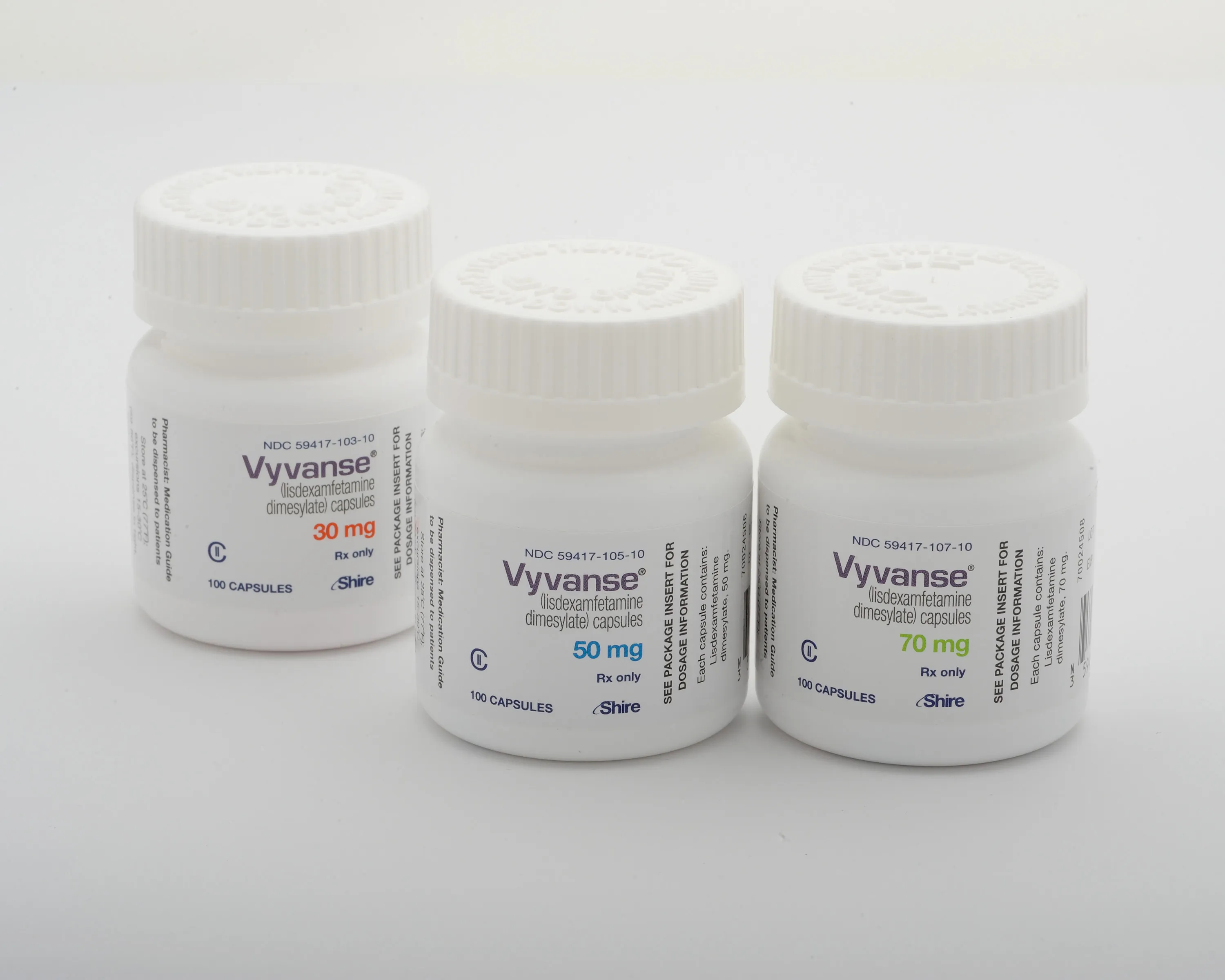
Vyvanse is the brand name for lisdexamfetamine dimesylate, a prescription central nervous system stimulant. It is classified as an amphetamine prodrug.
30 pills20 mg
$220.00 USD · one-time purchase
Free shipping on orders over $500.00 · In stock
Ingredients
lisdexamfetamine dimesylate
Shipping & payment
Standard and Express for USA and Canada; international services elsewhere. Free shipping over $500.00 after discounts. Shipping details · How to pay · Returns.
More about Vyvanse
Vyvanse product details
Vyvanse contains lisdexamfetamine dimesylate, an oral stimulant prodrug. It is FDA-approved for ADHD in adults and children aged 6 and older and for moderate-to-severe binge eating disorder in adults. It is not approved for weight loss, and its safety and effectiveness for obesity have not been established. Generic lisdexamfetamine products exist, although current supply depends on formulation and pharmacy. A prescriber reviews the diagnosis, cardiovascular and psychiatric history, other medicines and misuse risk before choosing treatment.
Generic name lisdexamfetamine dimesylate Brand names Vyvanse Drug class CNS stimulant US federal status Schedule II Available forms Capsules: 10–70 mg; chewable tablets: 10–60 mg.
How it works Lisdexamfetamine itself is a prodrug that is converted to dextroamphetamine, largely through activity in red blood cells. Dextroamphetamine increases dopamine and norepinephrine signaling by promoting release and reducing reuptake. Conversion changes delivery of the active drug compared with an immediate-release amphetamine tablet, but does not remove addiction or overdose risk. The exact mechanism responsible for therapeutic improvement in ADHD or binge eating disorder is not fully known. Appetite suppression is an adverse pharmacologic effect, not evidence that this medicine is an approved weight-loss treatment.
Elimination half-life Active dextroamphetamine: about 10–11.3 hours in healthy adults Absorption & metabolism After oral absorption, lisdexamfetamine is converted in blood to dextroamphetamine and lysine. The prodrug disappears more quickly from plasma than the active amphetamine; the longer half-life quoted in this reference refers to dextroamphetamine. Food and dosage form can affect the time of peak exposure, so peak concentration should not be mistaken for onset of clinical benefit. Active amphetamine elimination involves renal handling and is affected by urinary pH. Severe renal impairment reduces allowable exposure and requires product-label-specific prescribing limits. Half-life describes elimination, not how long benefits last or how long a drug test remains positive. Age, organ function, formulation, and other medicines can change these estimates.
Side effects & risks Common side effects Reduced appetite, insomnia, dry mouth, anxiety.
Serious reactions & long-term concerns Important serious risks include cardiovascular events in people with serious cardiac disease, new mania or psychosis, serotonin syndrome, circulation problems in fingers or toes, and slowed growth in pediatric patients. Misuse, overdose and unapproved administration can cause life-threatening toxicity. Chest pain, fainting, severe agitation, high fever or seizures need urgent care. Appetite or weight effects require monitoring even when symptom control improves. The prodrug design does not justify treating Vyvanse as nonaddictive or assuming that a higher dose will improve benefit.
Know when to get urgent help Call 911 for slowed or stopped breathing, inability to wake, seizure, collapse, or severe allergic swelling. If an opioid overdose is suspected, give naloxone if available and follow its instructions while emergency help is on the way. Vyvanse vs Adderall Vyvanse requires blood-mediated conversion to dextroamphetamine, whereas Adderall delivers a mixture of d- and l-amphetamine salts. Release formulation matters: immediate-release Adderall is different from Adderall XR, and neither should be substituted for Vyvanse on an assumed equal-dose basis. Both are controlled stimulants with similar monitoring needs, but their approved uses are not identical. Vyvanse includes adult binge eating disorder; immediate-release Adderall includes narcolepsy. Individual response, sleep, appetite, heart rate, blood pressure, coverage needs and availability guide the clinician’s choice.
PRODUCT FEEDBACK
Ratings & reviews
4.9 / 5
Based on 230 reviews.
More everyday good.
View all